4G and 5G home broadband: no line, no engineer, honestly judged
Broadband over the mobile network arrives by post and plugs in the same day, which makes it the fastest connection in Britain to set up and the most situational to rely on. Where fixed-line choices are weak or an install is weeks away, it can be a strong option; where indoor signal is poor or the local mast is busy at peak, no contract fixes physics. This page gives you the honest test, indoor signal, local congestion and contract terms, then shows the live 4G and 5G deals at your address.


The live comparison further down covers 4G and 5G home broadband, or run the full check here and see every technology side by side.
Independent and free. Or jump to the 4G and 5G deals below.- 4 networksEE, Three, Vodafone and O2 carry UK mobile broadband
- 0 engineersthe router posts to you and plugs straight in
- Rollingthe default contract style across wireless broadband
- Not OTScancellation sits with the provider, so align your dates
Where mobile broadband genuinely fits
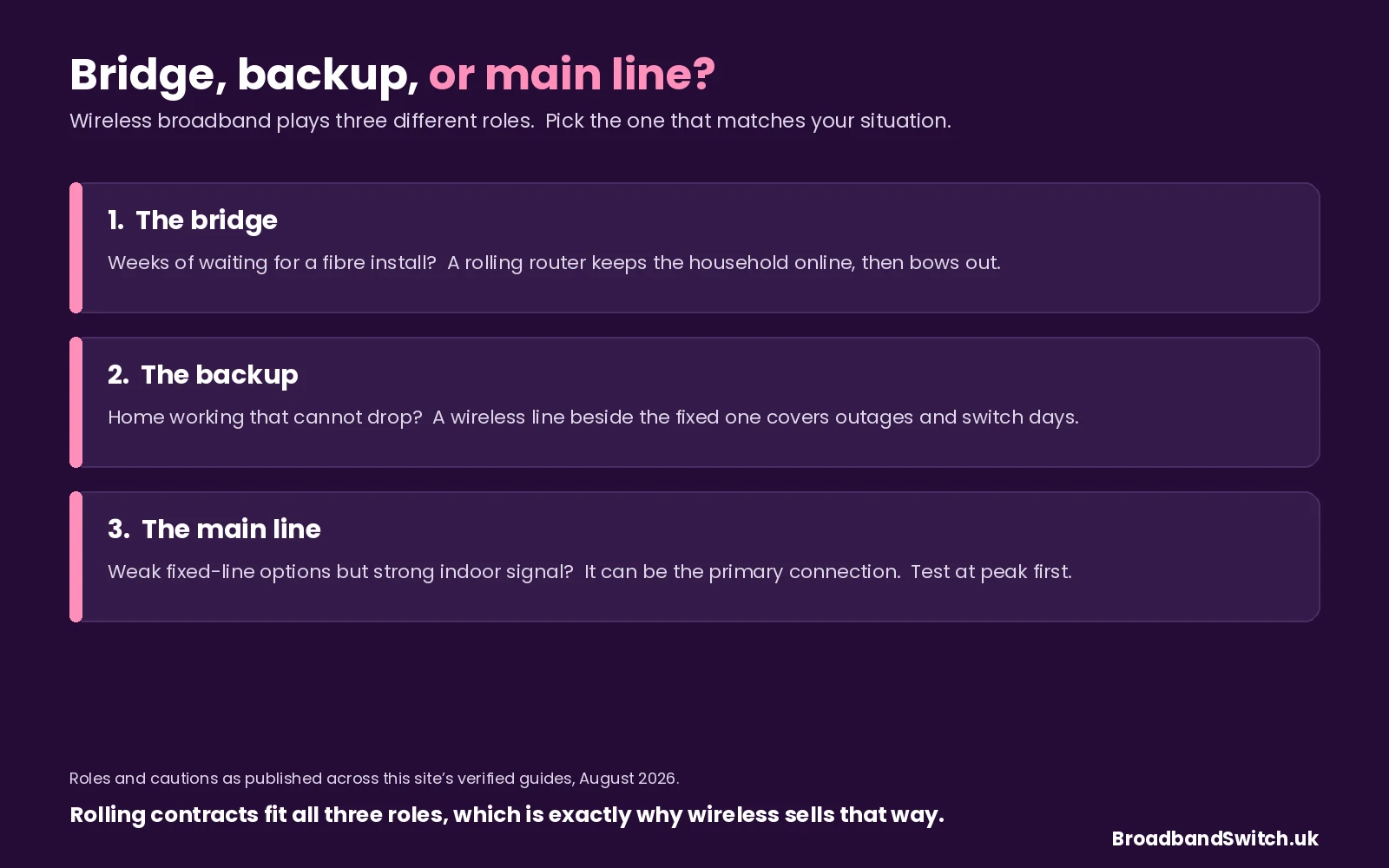
- The bridge to a fibre installWeeks of waiting for FTTP is the classic case: a rolling router keeps the household online for exactly the months needed, then bows out. The temporary backup guide has the playbook.Pay only for the gap
- Strong signal, weak fixed linesHomes where the mobile mast outperforms the copper are real, especially in rural areas the rural guide covers. Where that is your street, wireless can be the main line, tested honestly first.The physics decides
- Renters and short staysNo line, no engineer, no landlord conversation, and rolling terms from Three, EE and Vodafone by default: wireless suits short tenancies better than any fixed product, as the stopgap guide shows.Freedom built in
- The backup beside the main lineHome workers who cannot afford a dead connection run a wireless line alongside the fixed one, covering outages and switch days. The downtime guide sets it up properly.Insurance that streams
- Speed of deployment itselfWhen broadband is needed this week rather than next month, nothing beats a router in a box: order, receive, plug in, online. The trade for that speed is everything the verify section below checks.Days, not weeks
How it differs from a fixed line
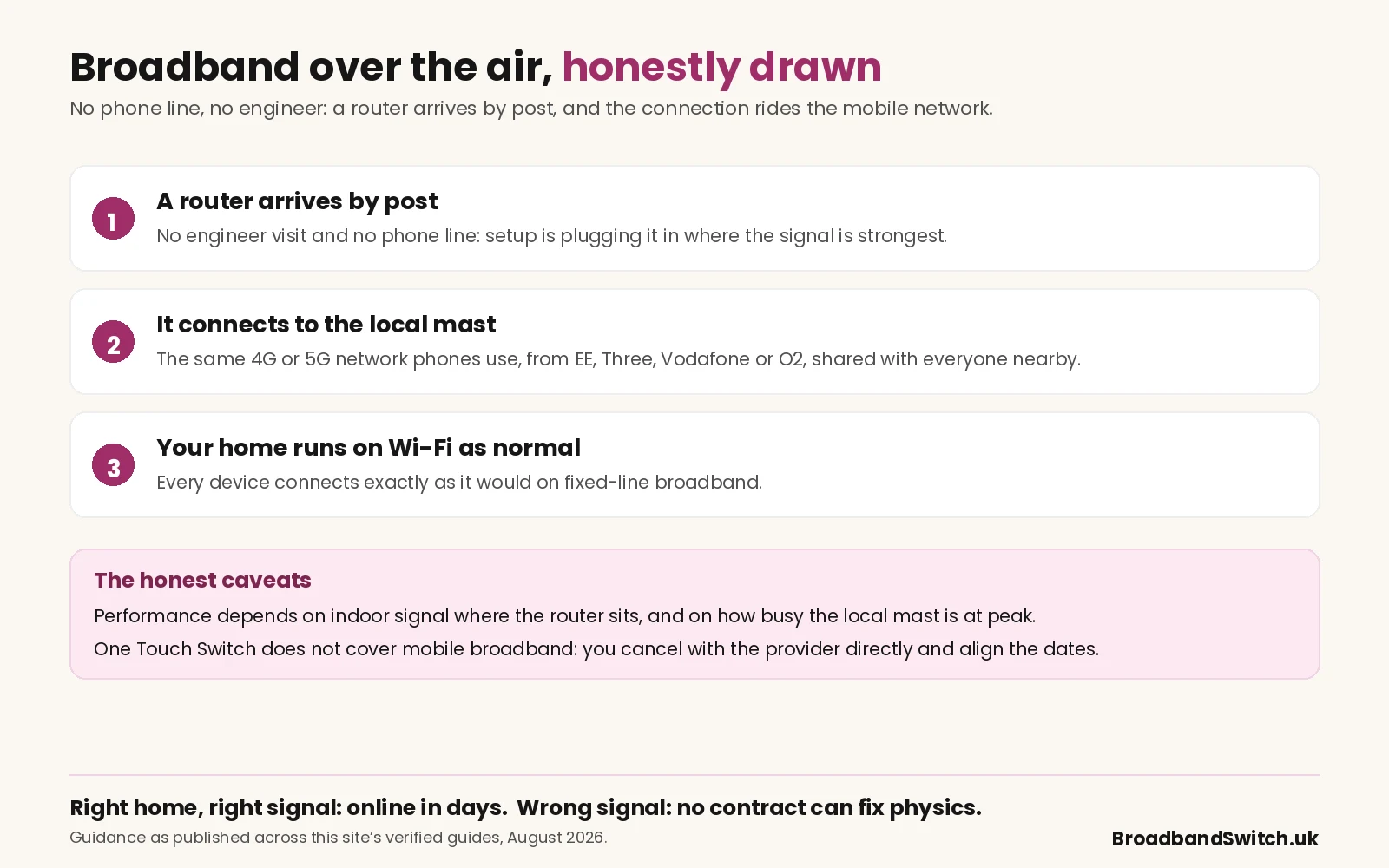
Your home runs on Wi-Fi exactly as it would on fibre; what changes is everything before the router. The connection rides the local mast, shared with every phone nearby, so performance follows indoor signal strength and how busy the cell is at peak evening hours rather than a dedicated line's steady figure. Setup flips the other way: no phone line, no engineer, no waiting. And one regulatory difference matters at the exit: One Touch Switch covers fixed-line broadband only, so leaving a wireless service means cancelling with the provider directly and aligning the dates yourself to avoid paying twice.
Verify first, sign second
- Indoor signal where the router will actually sitNot on the doorstep, not by the window you never use: the shelf it will live on. Ofcom's checker covers EE, Three, Vodafone and O2 by address, and a phone on the same network previews the room. And if indoor signal is the only blocker, note the outdoor units in the comparison below: they mount the receiver where the signal actually is.
- Peak-time behaviour, not a quiet-morning testThe mast is shared, so the evening is the exam. Test when the street is home and streaming, and let the quality monitor watch for swings.
- Latency, if calls or gaming matterWireless round-trips vary more than fixed lines, which video calls tolerate and competitive gaming does not. The latency guide explains what to measure.
- The usage policy and the full-term costRead the fair-use wording, any speed management terms, and the whole contract's spend against the fixed-line alternative, not a one-off headline. Wireless deals carry the same pounds-and-pence April disclosures as fixed lines, and the comparison below lists each deal's 2027 and 2028 amounts on the card, so read both. The contract guide frames it.
- The exit route, because OTS does not applyCancellation is with the provider, on their notice terms, with the router usually going back. Confirm the notice period and returns process before ordering, and diarise both.
4G or 5G, and which role to give it
The split is simple: 4G reaches further and behaves steadily, 5G is the faster experience where its coverage genuinely reaches indoors, and the address decides which you are really choosing. The dedicated 4G deals page and 5G deals page carry each side, and the technology comparison sets both against fibre and cable properly. The subtler decision is the role: bridge, backup or main line, and the checklist stays the same for all three: confirm address-level availability first, compare expected performance and full-term spend against the fixed alternatives, and choose for your normal evenings, not a one-off peak result.
Live wireless deals at your postcode
The comparison below is the truth for your address: 4G and 5G hubs from the mobile networks, currently featuring Three and Vodafone units in both indoor and outdoor versions, with 24-month and 30-day terms side by side. Every card shows the deal's average speed, its April 2027 and April 2028 rise amounts in pounds and pence, and any switching credit on offer, and the filters let you cut by speed, price, contract length, connection type and even contract price increases. Enter your postcode and choose your exact address where prompted.
If wireless results look thin at your address, the full comparison shows every technology together, and the availability checker confirms what each network can actually deliver to your door.
Related ways to compare
Wireless home broadband, asked and answered
Is 4G or 5G home broadband proper broadband?
Yes: your home runs on Wi-Fi exactly as it would on a fixed line, and for browsing, streaming and everyday use the experience can be indistinguishable. The difference is upstream of the router: performance follows the indoor signal and how busy the shared local mast is, which is why the honest test is always indoor signal, peak-time behaviour and contract terms rather than the headline speed.
How fast is setup compared with fixed broadband?
Days rather than weeks: the router arrives by post, plugs in where the signal is strongest, and the household is online the same day, with no phone line and no engineer visit. That deployment speed is the product's superpower, and it is exactly why wireless dominates the bridge role while a fibre install is pending.
Does One Touch Switch cover mobile broadband?
No. OTS applies to fixed-line residential broadband only, so moving to or from a 4G or 5G home service means cancelling with the provider directly, on their notice terms, and aligning the dates yourself to avoid paying two providers at once. Confirm the notice period and the router return process before you order, not after.
Are wireless deals really rolling contracts?
Mostly, yes: rolling terms are the default across 4G and 5G home broadband, with Three, EE and Vodafone routinely selling plug-and-play routers that cancel on notice rather than at a term's end. Fixed-term wireless deals exist too, usually at lower monthly prices, and the comparison below shows both side by side, where the same hub typically lists higher on 30-day terms than on 24 months, the rolling premium in action. Check which you are being offered and price the whole term either way.
Is it good enough for gaming and video calls?
Video calls generally cope well where signal is strong; competitive gaming is the honest exception, because wireless round-trip times vary more than a fixed line's and latency is what gaming feels. If either matters daily, test at peak evening time before committing, watch the connection with the quality monitor, and read the latency guide for what the numbers mean.
Is wireless a good answer in rural areas?
Often, yes: where fixed-line options are weak and full fibre has not arrived, a strong mast can outperform the copper, which is why wireless features so heavily in rural broadband planning and short-term tenancies alike. The physics still rules, so run the coverage check for your exact address and test indoors before treating it as the main line.
Can I use it as a bridge or backup rather than my main line?
That is where it shines. As a bridge, a rolling router covers the weeks of a fibre install wait and then bows out with a month's notice; as a backup, it sits beside the fixed line so outages and switch days never take a home worker offline. Both roles suit rolling terms perfectly, which is precisely why the product sells that way.
How do I check whether it will work at my address?
Two steps, in order: Ofcom's coverage checker shows EE, Three, Vodafone and O2 availability at your exact address, and a speed test at home, ideally at peak evening time and in the room where the router would live, shows what the signal really delivers. Only then compare prices, because a deal that cannot reach your sofa is no deal at all.
About this guide. Written by Dr Alex J. Martin-Smith and reviewed by Adrian James, with guidance stated as published and verified across this site's guides at 5 August 2026, and no speed or price figures invented where the honest answer is an address-level check. The suitability check runs in your browser and stores nothing. Coverage, usage policies and contract terms vary by network and tariff, so always verify in the provider's own terms before ordering. We earn commission when you order through the comparison, which never changes the price you pay: see how we rank deals, the editorial policy and the affiliate disclosure, or submit a correction and a human will read it.
References
- Ofcom. (n.d.). Ofcom checker: broadband and mobile coverage. Office of Communications. Retrieved August 5, 2026, from https://www.ofcom.org.uk/phones-and-broadband/coverage-and-speeds/ofcom-checker
- Ofcom. (n.d.). Switching broadband provider. Office of Communications. Retrieved August 5, 2026, from https://www.ofcom.org.uk/phones-and-broadband/switching-provider
- Ofcom. (2025, November 19). Connected Nations UK report 2025. Office of Communications. https://www.ofcom.org.uk/phones-and-broadband/coverage-and-speeds/nations-report-2025